
Nervous about your first ski trip? Livigno for first-time skiers is an ideal destination for a winter holiday, making that leap feel smaller. Nestled in the Italian Alps, the valley is broad, the light is often bright, and many beginner areas sit close to the village, so the mountain feels open rather than severe.
That matters for beginner skiers, when your legs feel shaky and every turn seems huge. In Livigno, you can start on gentle nursery slopes, move on to forgiving blue runs, and stay in familiar zones instead of being pushed all over the map.
If you want the calmest places to learn, better value from your lift pass, and the spots where confidence grows quickest, this is where to start.
Key Takeaways
- Livigno’s village-level nursery slopes in San Rocco and magic carpet areas offer gentle pitches and wide space, perfect for first-timers to learn basics without the stress of long lifts.
- Progress to steady blue runs on the Costaccia side, skiing mornings for grippy snow and quiet pistes that build confidence through repetition.
- Book lessons first, then repeat the same calm runs independently; start with beginner or half-day ski passes to match your energy and avoid waste.
- Choose accommodation near beginner lifts, leverage duty-free shopping, and time your trip for softer spring conditions to make the experience rewarding and affordable.
Start on the easiest parts of Livigno, where the mountain feels friendly
For most beginners, lower and flatter is better. Livigno’s ski resort works well because several learning areas in the ski area sit near the village, where the slopes are mellow and the day feels less like an expedition. You aren’t forced to ride a long chairlift into the unknown before you have even learned how to stop.
That village-level layout helps in a quiet way. You can see where you are going, return to the same area easily, and take breaks without turning the day into a logistical puzzle. For many women over 40 trying skiing for the first time, that familiar rhythm matters as much as the snow itself.
Timing helps too. Softer light, milder temperatures, and less pressure on beginner pistes can make the first days far more pleasant, especially if you plan around the best time to ski Europe for beginners.
The nursery slopes and magic carpet zones that make day one less scary
On day one, beginner skiers should look for the nursery slopes in the San Rocco area or near the village, terrain with a gentle pitch, a flat run-out, and room to stop without feeling hunted. Short surface lifts and magic carpets are your friends because they remove the drama of chairlifts while you learn the basics.

These areas are where you learn to slide, snowplough, stop, and turn without panic rising in your throat. Wide spaces matter because they give you time. Time to think. Time to balance. Time to laugh when things go wonky. Both sides of the valley, Mottolino and Carosello 3000, offer accessible zones that feel just right.
A good beginner zone should feel a bit like the shallow end of a pool. You can still wobble, but you won’t feel out of your depth.
Which easy blue runs help you move on without a big jump in difficulty
Once stopping and turning start to click, move to wide blue pistes with a steady gradient and easy blue slopes or blue runs. The best ones let you repeat the same shape of turn again and again, rather than forcing sudden steeper sections or narrow bottlenecks. In Livigno, the Costaccia side offers friendly terrain for those moving beyond the basics.

Not every blue run feels gentle, though. Some look harmless on the piste map and feel far less kind under your skis. Because conditions change, ask your ski school or lift staff which blue runs are skiing softest that day. A little local advice can save you from the kind of run that turns confidence into dread.
The right first blue run should feel like a small step up, not a cliff edge in disguise.
Where beginners gain confidence fast in Livigno
Confidence usually grows in layers. First, you stand and slide. Then you stop on purpose. After that, you link turns. Only then does a full easy run start to feel possible. Livigno’s high altitude and snow-sure destination status help maintain excellent snow quality, perfect for those learning to link turns.
The trick is not to rush the stages. If you can control speed, turn both ways, and finish a slope feeling you could do it again, you are ready to move on. If every run ends with burning legs, rigid shoulders, and relief rather than pleasure, stay on easier ground a bit longer.
Why morning snow and quiet slopes can make your learning curve smoother
Beginners often ski better in the morning in this ski resort. Fresh snow has more grip, the pistes are smoother, and your mind is clearer before fatigue creeps in. On quiet slopes, you also get more room to make wide turns without that flustered feeling of people rushing past.
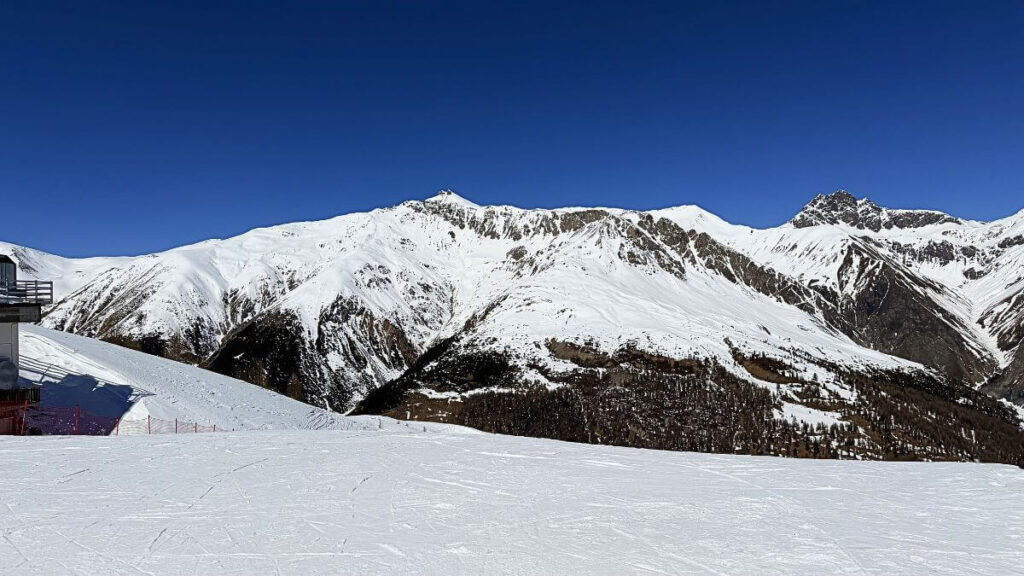
That extra space can change everything. Instead of reacting, you start choosing your line. Instead of surviving the slope, you begin skiing it.
Later in the day, chopped-up snow and scraped patches can make easy runs feel sharper. So if the snow turns firm, do not treat the last hour as a test of character. Call it early and keep the good feeling intact.
Book a lesson first, then repeat the same gentle runs on your own
A simple plan works best. Book ski lessons at a ski school first, then spend your next session repeating the same calm runs on your own. Repetition is not boring here, it is how the body learns. Each run lays down another thread until the movement feels natural.
An experienced ski instructor also saves you from poor route choices. They know which lifts keep you in beginner-friendly terrain and which runs only look easy on paper. That matters in a resort where a wrong turn can feel much steeper than expected.
Smart ski pass tips so you spend less and ski more wisely
Many first-timers buy too much ski pass access. It sounds sensible to get the full area ski pass straight away, but most beginners don’t use it well on day one. Between boot fitting, equipment hire, lesson time, coffee stops, and tired legs, the actual skiing window is often shorter than expected.
This quick guide makes the choice easier:
| Ski pass option | Best for | Why it helps |
|---|---|---|
| Beginner area ski pass | First morning or first day | You stay where you’ll learn most |
| Half-day ticket | Day one after hire and lessons | Less waste, less pressure |
| Full ski pass | After you can link turns confidently | More value once you can explore |
The smartest ski pass is the one that matches your energy, not your ambition.
When a beginner ski pass or half-day ticket makes more sense than a full ski pass
If it’s your first day on skis, a limited ski pass often makes more sense. You may only manage a few practice blocks, especially if you start with admin-heavy tasks like collecting skis and sorting boots.
Day two can go either way. If you’re still working in the nursery area and one or two gentle lifts, keep costs low. If you’ve already begun easy blue runs and want more mileage, then a wider ski pass may be worth it. Check the current ticket options carefully, because coverage varies.
Simple money-saving moves that do not make the trip feel cheap
Book ski school early, because last-minute choices are rarely the best ones. Hire ski equipment close to the slope you’ll actually use (and near the ski lifts), not at the far end of town. Choose accommodation with easy access to beginner ski lifts, since walking miles in ski boots drains energy before you start. Take advantage of Livigno’s duty-free shopping status in the Valtellina valley to pick up gear or souvenirs at great prices, without skimping on quality.
If you’re choosing dates, quieter spring weeks often bring softer conditions and a calmer feel, which is why many beginners like the March advantages for novice European skiing.
Livigno rewards a steady approach. Start small, repeat what works, and don’t pay for more mountain than you can enjoy.
The lovely surprise is that confidence often arrives quietly. One calm turn becomes three, then a full run, then a moment when you stop looking at your skis and finally look at the view. While beginners focus on the basics, intermediate skiers might head to the snowpark, and those looking for a slower pace can try cross-country skiing. After a rewarding day on the slopes, unwind in the village atmosphere and vibrant après-ski scene. That is where Livigno for First-Time Skiersshines.
Frequently Asked Questions
What are the best areas for first-time skiers in Livigno?
Livigno’s San Rocco nursery slopes and village-level magic carpets provide gentle terrain with flat run-outs, ideal for learning to slide, stop, and turn. Both Mottolino and Carosello 3000 sides have accessible zones, but start low and near the village to keep the day feeling familiar and low-pressure. Local ski school advice ensures you pick the softest spots each day.
Should I buy a full ski pass on my first day?
No, opt for a beginner area or half-day ticket initially, as first days involve hire, lessons, and short skiing sessions. This saves money and keeps you focused on learning zones without pressure to explore far. Upgrade to a full pass once you link turns confidently.
Is morning skiing better for beginners?
Yes, mornings offer fresh grippy snow, smoother pistes, and more space for wide turns before crowds and fatigue set in. This helps shift from survival to enjoying your line down the slope. End early if snow firms up to preserve good feelings.
Do I need to book ski lessons in Livigno?
Absolutely, lessons from an experienced instructor guide you to the right gentle terrain and teach efficient basics. Repeat their recommended runs on your own to embed the movements naturally. Early booking secures the best options without last-minute stress.
How can I save money without skimping on my Livigno trip?
Hire gear near beginner lifts, stay in accommodation close to slopes, and use duty-free shopping for quality at lower prices. Choose quieter spring dates for milder conditions and fewer crowds. Match your ski pass to your actual skiing time for real value.



0 Comments